ºìÌÒÊÓÆµ

Practical advice for an independent research career

The route to establishing research independence is a complex part of a scientist’s career. Alongside establishing a research programme, securing funding and publishing new discoveries, researchers are increasingly expected to lead teams, manage resources, build collaborations, engage with wider society and demonstrate the broader value of their work.

For many early career researchers, navigating this landscape in the UK can feel challenging. What can make a difference, however, is access to the advice, mentorship and the experiences of those who have travelled similar paths.

We are publishing a series of blog posts written by contributors from across the physical and life sciences working in the research landscape. The authors provide useful insights that encourage reflection and support researchers as they establish themselves as independent leaders in their field.

ºìÌÒÊÓÆµ is committed to supporting the next generation of research leaders. We hope that the perspectives provide helpful guidance and encouragement to navigate the many layers of a career in research.

We, the editors of this collection, met over 12 years go when we started new roles together. We spent the next 5 years supporting and leading research at one of the UK’s large, civic Universities. Much of that time we spent engaging with those researchers at the beginning of their research career, as they made that transition to being a leader, manager and research strategist. Many of these researchers felt as if the ecosystem ran by some hidden set of rules; if only they knew what these rules were, they’d be able to propel their careers to the next stage. Alas, even if there were some hidden rules, these rules are hidden from us too.! However, the absence of rules does not imply the absence of experience and a willingness to share advice. That advice differs from subject to subject, from person to person and certainly from era to era.

The research ecosystem, just like research itself, keeps evolving. Recent decades have seen the continual expansion of the dimensions on which success depends. Beyond the research itself and the associated tasks of funding and publication, researchers are also impact champions, recruitment consultants and financial managers – perhaps the only stable feature being the increasing dimensionality itself.

In this collection of essays, we have approached many of our own mentors and colleagues and asked them the simple question “what practical advice you would give to someone embarking on their independent research career?”. We set very few rules other than these essays are not in themselves a critique nor agent for change of the ecosystem, rather that they offer pragmatic and implementable advice.

These essays are aimed at those in the physical and life sciences at the start of their independent careers – we hope that you find them as valuable to read as we did to commission and edit. Remember that there is no hidden set of rules, simply mentors and advice that might help you on your way. 

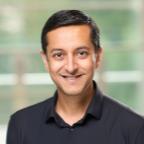
Tanita and Miles

Tanita is the Director of the Research Strategy & Policy Unit at the University of Oxford, UK. The Unit leads on institutional strategies and initiatives to strengthen the quality of Oxford’s research and research environment across its 14,000 research staff and students. 

She has led and collaborated on projects to encourage more equitable approaches to reward and recognition, career support, skills development, and securing research funding.

From 2015–2021, Tanita was the Head of Research Policy at the University of Glasgow, where she was also institutional co-lead for research culture, co-lead of Lab for Academic Culture, and co-author of the university’s 5-year research strategy (2020–2025).

Previously, Tanita launched a Wellcome-funded facility for the analysis of ‘big data’ in biology, and for 12 years worked as a commissioning editor at Springer-Nature.

She has a PhD in Genetics from the MRC-LMB/University of Cambridge.

Miles Padgett is a Royal Society Research Professor and holds the Kelvin Chair of Natural Philosophy at the University of Glasgow. For five years (2014–2019) he was Vice Principal (Pro Vice Chancellor) for Research at the University and for six months in 2023 the interim Executive Chair of EPSRC (Engineering and Physical Sciences Research Council).

His research covers all things optical, from the way light behaves as it pushes and twists the world around us to the application of new techniques in imaging and in 2025 launched a spin out company, “MicroEndo”, producing endoscopes the thickness of a single human hair.

He has served on many grant, fellowship, and award committees, including the Leverhulme Trust Research Awards Advisory Committee (covering all non-clinical subjects). He chaired the fellowship election sectional committee 2 of ºìÌÒÊÓÆµ, chaired their early career researcher fellowship panel, sat on their nominations committee and is now an elected member of their Governing Council.